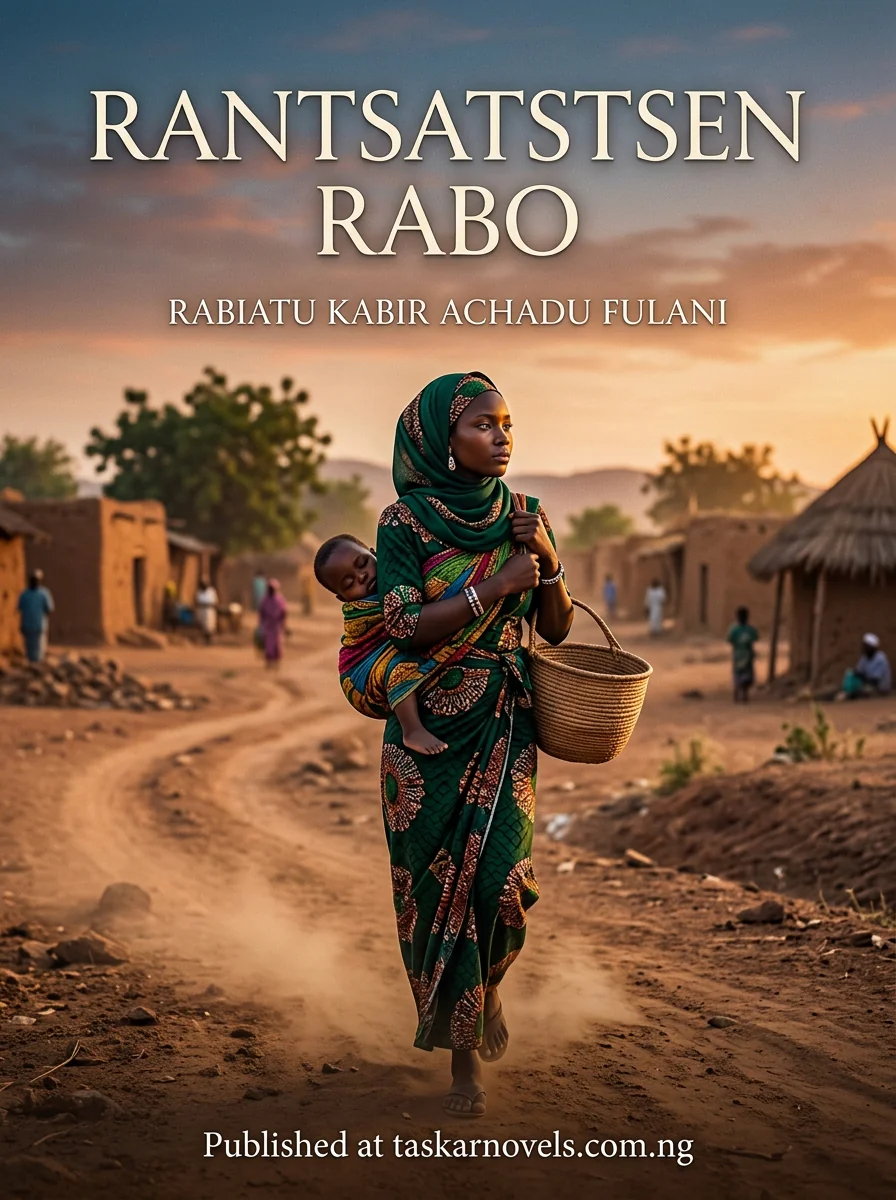

Imagine it is late at night in Kano, Nigeria. The world is quiet, but inside a big house in Sharada, things are a bit tense. You have a retired General named El-Hussein talking to his wife in bed. It is 11:03 pm, and the General is worried about their son, Nurayn. He tells his wife that maybe they need to find the boy a wife very soon. Why? Because every time he goes to wake the boy up for dawn prayers, he hears "strange sounds" coming from the room. The General is even scared to enter the room sometimes because the sounds are so loud and intense. He thinks his son has too much energy and needs a woman before things get out of hand. But the mom is just laughing. She thinks it is a sign that her son is a strong, healthy man. She even says he got that from his father! She tells the General to leave the boy alone because he is in his final year of school and should enjoy his youth. This is how Ruqayyah Kabir starts this story, showing us a family that seems perfect on the outside but has these deep, private conversations about desire and growing up.
The way the mom defends her son is actually quite funny. She says, "It is a sign of health for a 22-year-old young man to have these dreams." She doesn't want him to get married yet because she has already picked a girl named Anam for him later. She wants him to "feel his life" before settling down. The General is not convinced, though. He feels like the boy is struggling with something big. This part of the book really makes you think about how parents look at their children’s growth. Some are worried about the moral side, while others think it is just nature. If you want to see how this family drama unfolds, you should look for best Hausa novels to see more stories like this one.
But then, the story shifts to a completely different house, and this is where your heart starts to beat fast. We meet Husna. It is 2:40 am, the middle of the night. While everyone is sleeping, Husna is going through a silent war with her own body. She is lying there with her sister Zarah, but she can't stay still. She is feeling so much desire that her legs are shaking. She has to sneak out to the bathroom just to breathe. She locks the door and starts crying. It is so sad because she feels like she is doing something wrong, but she doesn't know how to stop the way she feels. The book says, "She really hopes Allah will save her from this condition of hers." This moment is so heavy because you can feel her guilt and her pain. She is trying to be a good person, a good Muslim girl, but her body is asking for something she can't give it in a "halal" way.
Inside that bathroom, Husna is a mess. She is sweating, she is shaking, and she is trying so hard not to make any noise so her sister won't wake up. She resorts to touching herself just to get some relief, but even that doesn't make her happy. It just makes her feel more ashamed. After she is done, she has to perform a ritual bath and start praying. She spends the rest of the night on her prayer mat, crying to God to help her. She used to watch things on her phone to help, but now even that doesn't work. She feels trapped in her own skin. It’s a very deep and honest look at a struggle many people don't talk about in our society. You can download Hausa novels that cover these kinds of real-life issues if you want to understand these characters better.
Then we see the third side of the story, which is Husna's home life during the day. Her father, Malan Ali, is a very, very strict man. At 4:00 pm the next day, he is shouting at his wife, Mama. He is angry because Husna went to a friend's wedding without asking him directly. He feels like his authority is being challenged. Malan Ali is the kind of father who follows his daughter to the school where she teaches just to see if she is talking to boys. He doesn't want her to have any male friends. He says, "I am not ready to let my daughter interact with any man until she reaches a level where she is above being disrespected by anyone." He thinks he is protecting her, but he is actually making her life a prison. He doesn't realize that by closing all the doors, he is making her internal struggle even worse.
Mama, who is Husna's step-mother but loves her like her own, tries to stand up for her. She tells Malan Ali that he is being too hard. She says Husna is a grown woman and he should give her some space. But the father won't listen. He even starts throwing it in Mama's face that she isn't Husna's real mother. It is a very toxic environment. You see why Husna is so lonely and why she has no one to talk to about her feelings. Her father is busy guarding the front door while her heart is breaking inside the house. This book really shows the gap between parents and children. If you enjoy reading about family secrets and strict fathers, you can find many Hausa novels online that talk about these themes.
One of the most interesting things about the way Ruqayyah Kabir writes is how she shows the contrast between Nurayn and Husna. Nurayn is in a rich home where his mom laughs about his "manhood," while Husna is in a strict home where she is treated like a criminal just for going to a wedding. Both of them are dealing with strong desires, but their worlds are so different. One part of the book says — "I won't go to wake Usman up for dawn prayers without hearing strange sounds, sometimes I don't even want to enter the room." (translated from Hausa). This shows us that Nurayn's father is worried but at least he is aware, whereas Husna's father has no idea what his daughter is going through in the middle of the night. He thinks she is perfect because he watches her every move, but he doesn't know her soul at all.
As the story goes on, you start to wonder how these two will eventually meet. You have Nurayn, who is being pressured to marry Anam, and Husna, who is being locked away from the world. The title "Fifty Shades of Husna" really fits because it shows so many sides of her. She is a teacher, a prayerful daughter, a sister, but also a woman with deep, hidden needs that she is ashamed of. It makes you feel for her. You want her to find a way to be happy without feeling like a bad person. The drama between the father and the mother also adds a lot of spice to the story. Mama is such a good person for defending a child that isn't hers, even when the husband is being mean to her.
The tension in the house is so thick you can cut it with a knife. Malan Ali even threatens to send Mama back to her parents' house just because she spoke the truth. He is so focused on his "rules" that he is losing his family. He says that if Husna wants to get married, he will find her a husband himself, but he doesn't think she is ready. He thinks all the men outside are "useless." This kind of overprotection is what drives many girls to do things in secret. The author does a great job of showing how this happens. It isn't just about "bad behavior," it's about a lack of communication and freedom. You can find this book and more on Taskar Novels if you want to see what happens when Husna finally reaches her breaking point.
This novel is not just a simple romance. It's about the secrets we keep and the way our upbringing shapes us. It's about the struggle between what we want and what the world expects from us. Husna's character is so relatable because everyone has a secret they are afraid to tell. And Nurayn's character shows that even "golden boys" have their own battles. The way the story is moving, you know there is going to be a huge explosion of drama soon. Will Husna's father find out about her nightly struggles? Will Nurayn be forced to marry someone he doesn't want? The suspense is real! You should definitely check out this story and others like it. You can get the full book and explore many other amazing titles on Taskar Novels. It is the best place for anyone who loves deep, emotional, and realistic stories.